Showing posts with label diagnosis. Show all posts

Sunday

How to use Tiger Balm correctly for fibromyalgia pain (and other pain)

🐯  Using Tiger Balm correctly helps ensure you get the maximum relief from pain while minimizing any skin irritation or side effects. 

how to use tiger balm for fibromyalgia

Here's a quick, clear guide:

🧴 How to Use Tiger Balm

1. Choose the Right Type

  • White Tiger Balm: Cooling, better for headaches, migraines, nasal congestion, and general aches.

  • Red Tiger Balm: Warming, better for muscle pain, joint pain, and backaches.


✅ Application Instructions

  1. Clean the Area
    Wash and dry the skin where you’ll apply it.

  2. Take a Small Amount
    Scoop a pea-sized amount with your finger or a cotton swab.

  3. Rub It In
    Gently massage into the affected area using circular motions for 1–2 minutes until absorbed.

  4. Wash Hands Thoroughly
    Especially important to avoid accidental contact with eyes, mouth, or other sensitive areas.


💡 Where to Apply (Common Uses)

ConditionWhere to ApplyNotes
HeadacheTemples, forehead, back of neck
Avoid eyes; use White Balm

Muscle/joint painAffected muscle or joint area
Use Red Balm for deeper pain

Back painLower or upper back area

Massage deeply


CongestionChest or under nose (lightly)Use White Balm only


⚠️ Precautions

  • Do not apply to broken, irritated, or sensitive skin

  • Avoid sun exposure after applying Red Balm (it can irritate skin)

  • Use up to 3–4 times per day

  • Not for children under 2

  • Avoid bandaging tightly over the balm unless advised


🕒 When to Expect Results

  • You should feel cooling or warming sensations within minutes.

  • Pain relief typically lasts a few hours.

  • For chronic pain, consistent use over several days may help more.

How to use Tiger Balm

You may be interested in these articles:

Friday

Upper Trapezius Changes Linked to Fibromyalgia

This study reveals that muscle changes in Fibromyalgia can be seen in ultrasounds and that upper trapezius changes are linked to Fibromyalgia.

trapezius muscle in  FM patients

Fibromyalgia (FM) is a long-term condition that causes widespread muscle pain, fatigue, sleep problems, and memory issues. It affects about 2–3% of people globally. The exact causes of FM are still not well understood, but both genetic and environmental factors seem to contribute. 

Recent research suggests that central sensitization—a condition where the nervous system becomes overly sensitive to pain—plays a role in FM.

In the past, FM has been diagnosed using tender points on the body. Studies have shown that muscles in these areas may have poor blood flow and signs of damage related to low oxygen levels. One muscle often affected is the upper trapezius (the muscle along the back of the neck and shoulders).

Trapezius muscle
* Trapezius muscle * Original by sv:Användare:Chrizz


Use of Ultrasound in FM:
Ultrasound is a safe and noninvasive tool used to examine muscles. Newer methods like blob analysis can give more detailed images of muscle structure. Blob analysis looks at clusters of similar signals (called "blobs") in the muscle, helping to detect structural changes that might not be visible with standard imaging.

While blob analysis has been used to study other muscle conditions, it hasn’t been used before to assess muscles in FM patients. 

This study aims to fill that gap by examining the upper trapezius muscle using B-mode ultrasound and blob analysis in FM patients compared to healthy individuals.

Methods:
The study included 34 women with FM and 34 healthy women. Participants were evaluated using several scales to measure pain, fatigue, mental health, and quality of life. 

Ultrasound images of the upper trapezius muscle were taken and analyzed using blob analysis software to measure blob size, count, and brightness (echointensity).

Key Findings:

  • FM patients had larger and more numerous blobs in the upper trapezius muscle compared to healthy individuals.

  • Higher echointensity (brighter muscle areas) was found in FM patients.

  • Blob size and count were linked to higher pain, fatigue, and central sensitization scores.

  • These structural muscle changes could help explain ongoing pain and sensitivity in FM.

Conclusion:
This study is the first to use blob analysis with ultrasound to examine muscle changes in FM. 

The results suggest that FM is associated with measurable structural muscle changes, particularly in areas of pain. This technique may offer a more objective way to assess FM and understand its underlying mechanisms.

Source:

Structural changes in the upper trapezius muscle of fibromyalgia patients identified by quantitative ultrasonography: a cross-sectional study
Observational Research | Open access | Published: 22 April 2025

Fibromyalgia and upper trapezius


Monday

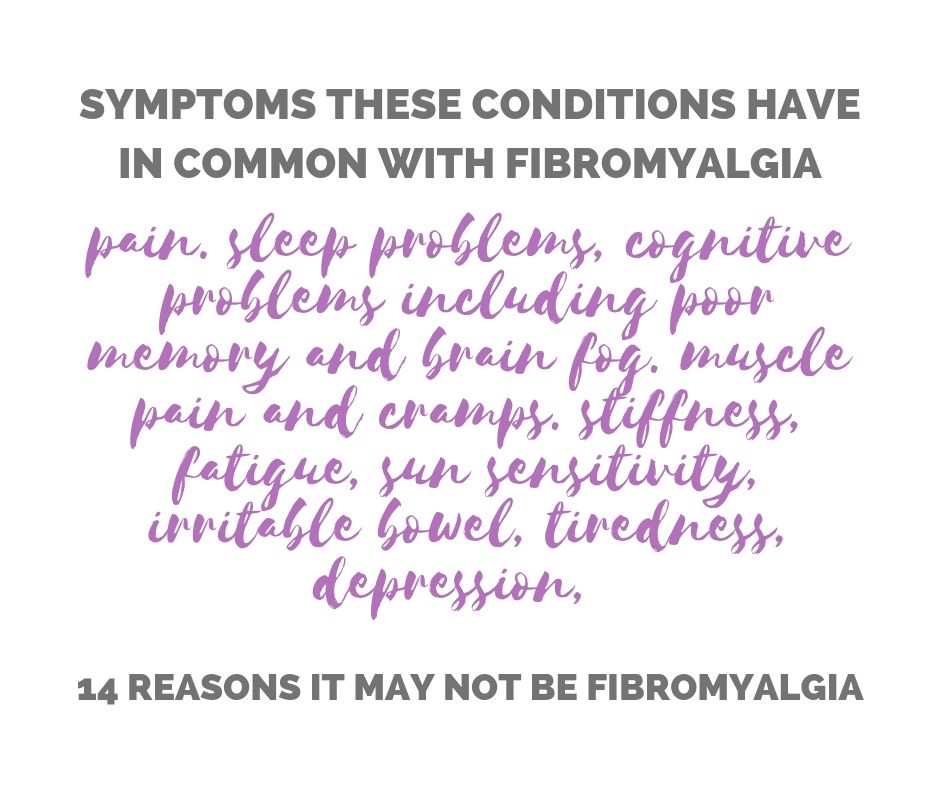
14 reasons it may NOT be Fibromyalgia

diagnosing fibromyalgia


The symptoms of fibromyalgia are found in so many other illnesses. That's why diagnosis is problematic. Here are 14 reasons why it may NOT be Fibromyalgia...

Fibromyalgia has many, varied and fluctuating symptoms. It should be considered when a patient describes a history of widespread pain, with no evident cause, that lasts three months or more. 


As well as this chronic musculoskeletal pain, whichaffects the bones, ligaments, muscles, nerves and tendons they have fatigue and sleep problems and stiffness. These symptoms are usually accompanied by a number of other conditions such as sensitivity to chemicals, irritable bowel or restless legs and depression or anxiety. The symptoms can often start, or worsen, during a period of severe psychosocial or physical stress.

Fibromyalgia presents a unique medical problem: 
  • Its symptoms are so common, that it is both underdiagnosed and misdiagnosed. 
  • Because there are no blood tests or scans to easily diagnose it, many physicians have trouble detecting the disorder. 
  • It can NOT be easily confirmed or ruled out with a simple blood test. 
  • It can't be seen on an X-ray or MRI. 
  • Instead, fibromyalgia appears to be linked to changes in how the brain and spinal cord process pain signals.
Because there is no test for fibromyalgia, your doctor must rely solely on your group of symptoms to make a diagnosis and rule out other conditions.
The key symptoms of fibromyalgia are also commonly found in many other illnesses, and a thorough examination and investigation needs to be undertaken in order to ensure there is not another pathological cause for the symptoms – particularly if there are any ‘red flags’ in the patient’s history suggestive of another serious pathology (Table 1).
Table 1. Red flags
  • Older age at new symptom onset
  • Weight loss
  • Night pain
  • Focal pain
  • Fever or sweats
  • Neurological features
  • History of malignancy

Doctors need to rule out
:

  1. arthritis 
  2. lupus 
  3. multiple sclerosis 
  4. chronic fatigue syndrome 
  5. polymyalgia rheumatica 
  6. hypothyroidism
  7. depression
  8. polymyositis
  9. hyperparathyroidism
  10. adrenal insufficiency
  11. myasthenia gravis
  12. cushing’s syndrome
  13. sjogren's syndrome
  14. Infection: chronic viral infection, HIV, hepatitis, Lyme disease
So if a doctor asks you about your mood, or skin rashes, or sends you for a blood test of your antibodies or an MRI they are just doing their job. They are ruling out these 14 conditions which have similar symptoms to Fibromyalgia. It is important to do so because these 14 conditions have specific treatments.

reasons it may NOT be Fibromyalgia
Symptoms NOT usually found in Fibromyalgia include:
  1. arthritis: swelling and redness, loss of motion in joints
  2. lupus: butterfly-shaped rash across cheeks and nose, anemia, abnormal blood clotting
  3. multiple sclerosis: brain lesions on an MRI
  4. chronic fatigue syndrome: profound fatigue that is more intense than pain, sore thoat
  5. polymyalgia rheumatica: average age of onset is 70, elevated levels of inflammatory proteins in blood.
  6. hypothyroidism: thyroid autoantibodies are common
  7. depression:
  8. polymyositis: muscle weakness in proximal muscles: upper arms, thighs.
  9. hyperparathyroidism: presence of hypercalcemia
  10. adrenal insufficiency: severe exhaustion, not typically associated with chronic widespread pain.
  11. myasthenia gravis: neurologic signs characteristic of specific disease.
  12. cushing’s syndrome: characteristic facial and skin signs of Cushing’s syndrome
  13. sjogren's syndrome: dry eyes and dry mouth, presence of anti bodies specific to Sjogren's
  14. Infection: chronic viral infection, HIV, hepatitis, Lyme disease
Getting a Diagnosis
I suggest that you keep a diary of your symptoms. This should make it easier to talk to your doctor or specialist. Especially if you have memory problems, writing things down will provide the doctor with the information that they need to make a correct diagnosis.

Fibromyalgia symptoms

When you go to a consultation go with:

  • a list of questions 
  • a list of current medications 
  • a brief medical history including your parents main conditions
  • a list of your symptoms
When writing the list of your symptoms try and remember what were your first symptoms and what year they started and then the next symptoms and the year etc. as many doctors ask these questions.
More clues for fibromyalgia diagnosis (from MayoClinic)

People who have fibromyalgia also often wake up tired, even after they've slept continuously for more than eight hours. Brief periods of physical or mental exertion may leave them exhausted. They may also have problems with short-term memory and the ability to concentrate. If you have these problems, your doctor may ask you to rank how severely they affect your day-to-day activities.

Fibromyalgia often coexists with other health problems, so your doctor may also ask if you experience:

  • Irritable bowel syndrome
  • Headaches
  • Jaw pain
  • Anxiety or depression
  • Frequent or painful urination
Remember that all ongoing pain should be evaluated. I am saying this because after a while of not getting a diagnosis you may start to question whether the pain is all in your head. 

Lee Good has 20+ years of experience helping people with chronic illness to understand research information and is recognized as a leader in patient advocacy. She is the WEGO winner, 2018/19 for building the best patient community around Fibromyalgia and editor at Fibro Blogger Directory, which is a community of fibromyalgia bloggers.

RESOURCES:

Fibromyalgia: Understand the diagnosis process MayoClinic
Diagnostic challenges: Australian Family Physician
Musculoskeletal Pain: Cleveland Clinic


Saturday

2010 set of criteria for diagnosing fibromyalgia

criteria for diagnosing fibromyalgia
In 2010, the American College of Rheumatology endorsed a new set of criteria for diagnosing fibromyalgia. Here is an excerpt from it:

A patient satisfies diagnostic criteria for fibromyalgia if the following 3 conditions are met:
1. Widespread pain index (WPI) > 7 and symptom severity > 5 or WPI 3-6 and SS scale score > 9

2. Symptoms have been present at a similar level for at least 3 months.
3. The patient does not have a disorder that would otherwise explain the pain.


criteria for diagnosing fibromyalgia

ASCERTAINMENT 

1. WPI: note the number areas in which the patient has had pain over the last week. In how many areas has the patient had pain? Score will be between 0 and 19. 
Shoulder girdle, 
left Shoulder girdle, 
right Upper arm, 
left Upper arm, 
right Lower arm, 
left Lower arm, 
right Hip (buttock, trochanter), 
left Hip (buttock, trochanter), 
right Upper leg, 
left Upper leg, 
right Lower leg, 
left Lower leg, 
right Jaw, 
left Jaw, 
right Chest 
Abdomen 
Upper back 
Lower back 
Neck 

2. 
SS scale score: 
Fatigue 
Waking unrefreshed 
Cognitive symptoms 
For the each of the 3 symptoms above, indicate the level of severity over the past week using the following scale: 
0 = no problem 
1 = slight or mild problems, generally mild or intermittent 
2 = moderate, considerable problems, often present and/or at a moderate level 
3 = severe: pervasive, continuous, life-disturbing problems 

Considering somatic symptoms in general, indicate whether the patient has:* 
0 = no symptoms 
1 = few symptoms 
2 = a moderate number of symptoms 
3 = a great deal of symptoms 

The SS scale score is the sum of the severity of the 3 symptoms (fatigue, waking unrefreshed, cognitive symptoms) plus the extent (severity) of somatic symptoms in general. The final score is between 0 and 12.

* Somatic symptoms that might be considered: muscle pain, irritable bowel syndrome, fatigue/tiredness, thinking or remembering problem, muscle weakness, headache, pain/cramps in the abdomen, numbness/tingling, dizziness, insomnia, depression, constipation, pain in the upper abdomen, nausea, nervousness, chest pain, blurred vision, fever, diarrhea, dry mouth, itching, wheezing, Raynaud's phenomenon, hives/welts, ringing in ears, vomiting, heartburn, oral ulcers, loss of/change in taste, seizures, dry eyes, shortness of breath, loss of appetite, rash, sun sensitivity.


Read the complete article (in pdf) from the American College of Rheumatology.


criteria for diagnosing fibromyalgia

Thursday

How can a doctor diagnose Fibromyalgia?

Criteria to diagnose Fibromyalgia
There is a lot of confusion around the diagnosis of Fibromyalgia. I personally have experienced this when I was seeking help for chronic stiffness and pain.

To keep things simple Fibromyalgia or Fibromyalgia Syndrome (FMS) is diagnosed by a doctor, nurse or other medical specialist when you have 11 or more tender points in SPECIFIC places on your body. (This way of diagnosing was current when I wrote this article. It has been superceded by the which you can find here. This does not mean that you will not have the tender points but they are no longer used as the definitive test for Fibromyalgia.)

The following is a diagram of these tender point spots. There are 18 in all and you must have soreness, on touch, in 11 or more to have a diagnosis. (Prior to 2010)

Fibromyalgia tender points


Fibromyalgia is now diagnosed according to criteria published by the American College of Rheumatology: widespread musculoskeletal pain and tenderness measured by the ‘tender point count’ on physical examination.

DIFFICULTY IN GETTING A DIAGNOSIS OF FIBROMYALGIA
There are many reasons why you may find it difficult to get a correct diagnosis.
Here are some I have encountered:
  • FMS can exist at the same time as other medical conditions and these can also be pain conditions e.g. I have Polymyositis which is an autoimmune condition which causes weakness and pain in proximal muscles but I also have FMS as I have tender point pain in 11 places.
  • There is no specific blood test for FMS.
  • There’s no scan, or imaging that can confirm fibromyalgia.
  • When blood work and imaging come back “normal,” some doctors may dismiss your symptoms or consider it psychological.

  • Many medical specialists believe that fibromyalgia is all in the head and this can range from a variety of opinions from it doesn't exist to, it is due to depression, to it is due to changes in neurochemicals in the brain.
  • One specialist told me that FMS is a diagnosis given to people in pain when they have not yet got a complete diagnosis.
  • Because symptoms are invisible and vary day-to-day, they can be misunderstood or dismissed.
  • FMS causes so many symptoms, not just pain, and the patient may not present with the pain as the other symptoms may be their immediate concern.
  • Not all healthcare providers are fully trained or up-to-date on fibromyalgia.
  • Some doctors diagnosis or mislabel it as stress, anxiety, or depression because these can all be a part of FMS.
  • If you have coexisting conditions (e.g., arthritis or IBS), fibro may be overlooked.
  • Symptoms need to be widespread and persistent for at least 3 months.

  • A single appointment might not capture the full picture — it often takes multiple visits and tracking symptoms over time.

  • Gender Bias

    • Fibromyalgia affects more women than men so men may not be as easily diagnosed.

    • Some studies show women’s pain is taken less seriously or written off as emotional, which can delay diagnosis.

  • Communication Challenges

    • Some people don’t realize how much their symptoms matter or may downplay them at appointments.

    • Or, they struggle to find the right words to describe symptoms like "fibro fog" or "deep bone pain."

  • Seeing the Wrong Specialist

    • Primary care doctors might refer you to rheumatologists, neurologists, endocrinologists, etc.

    • If none see the whole picture, it can lead to a diagnosis maze or even misdiagnosis.


Diagnosis of Fibromyalgia

You may also be interested in reading:

Thanks for reading my blog. I am Lee Good and I was diagnosed with Fibromyalgia in 1990 by an endocrinologist. I have spent many years researching and writing about Fibromyalgia. 

Diagnosing Fibromyalgia

Diagnosis of FMS is performed mostly in the primary care setting. However, tender point examination rarely is performed in this setting, and when it is performed, it often is done incorrectly - See more at: http://www.rheumatologynetwork.com/fibromyalgia/new-and-modified-fibromyalgia-diagnostic-criteria#sthash.aWEKP0OI.dpuf
Fibromyalgia is a complex, chronic condition that causes widespread pain, fatigue, and cognitive challenges. 

tools for diagnosing Fibromyalgia

Diagnosis is usually made by a family doctor or rheumatologist, but it’s not always straightforward. 

Historically, the tender point test was used—but studies show it was often applied incorrectly and lacked sensitivity as it was often done incorrectly. *

The tender point test investigated 19 pain locations and 6 self-reported symptoms: difficulty sleeping, fatigue, poor cognition, headaches, depression, and abdominal pain. It would help a GP get insight into your symptoms and their severity.
Fibro criteria survey


 What’s Changed?

The updated diagnostic criteria emphasizes a multidimensional approach that better reflects the lived experience of fibromyalgia. Instead of focusing solely on physical exam findings, doctors now use a combination of:

  • Widespread Pain Index (WPI): Assesses pain in 19 body regions.

  • Symptom Severity Scale (SSS): Rates fatigue, unrefreshing sleep, cognitive symptoms, and other somatic complaints like headaches, depression, and abdominal pain.

  • Duration of Symptoms: Symptoms must be present at a similar level for at least three months.

  • Exclusion of Other Conditions: Doctors must rule out other causes of pain and fatigue, such as autoimmune diseases or thyroid disorders.

This updated framework helps GPs and specialists gain a clearer picture of symptom severity and distribution—especially when symptoms overlap with other chronic illnesses.

The 2016 revisions to the 2010/2011 criteria for diagnosing Fibromyalgia remain the most widely recognized and validated framework for diagnosing fibromyalgia, especially in clinical and research settings.

Summary of the evolution:

  • 1990: Tender point exam introduced—limited and often misapplied

  • 2010: Shift to patient-reported symptoms (WPI + SS)

  • 2011: Refinements to improve usability

  • 2016: Further revisions to enhance diagnostic accuracy and better reflect generalized pain and polysymptomatic distress

This progression reflects a growing recognition of fibromyalgia as a multisystem condition, not just a localized pain disorder. The move toward patient-centered criteria has empowered more accurate diagnoses and validation of lived experience.

What Is the Fibro Criteria Survey?

The Fibro Criteria Survey is a self-report tool based on the WPI and SSS. It’s not a diagnostic test on its own, but it can help your doctor understand your symptoms more thoroughly. It’s especially useful for tracking changes over time or preparing for appointments. Get the pdf here.

A Note on Self-Diagnosis

Fibromyalgia should always be diagnosed by a qualified medical professional. While self-advocacy is essential, patients should not diagnose themselves. If you suspect fibromyalgia, bring your symptoms to a trusted GP or specialist and ask for a thorough evaluation.

*  Fitzcharles MA, Boulos P. Inaccuracy in the diagnosis of fibromyalgia syndrome: analysis of referrals. Rheumatology (Oxford). 2003;42:263-267. 
   Buskila D, Neumann L, Sibirski D, Shvartzman P. Awareness of diagnostic and clinical features of fibromyalgia among family physicians. Fam Pract. 1997;14:238-241.

Diagnosis of Fibromyalgia


Fitzcharles MA, Boulos P. Inaccuracy in the diagnosis of fibromyalgia syndrome: analysis of referrals. Rheumatology (Oxford). 2003;42:263-267.
4. Buskila D, Neumann L, Sibirski D, Shvartzman P. Awareness of diagnostic and clinical features of fibromyalgia among family physicians. Fam Pract. 1997;14:238-241.
- See more at: http://www.rheumatologynetwork.com/fibromyalgia/new-and-modified-fibromyalgia-diagnostic-criteria#sthash.T4XiYuC7.dpuf

Wednesday

Fibromyalgia and stress

The causes of fibromyalgia are unknown, but many sufferers can trace its onset to a significant increase in stress in their life.

woman overwhelmed at work in office
DO YOU KNOW THIS FEELING OF STRESS?

Stress can amplify the body’s response, potentially sparking or worsening fibromyalgia symptoms.

In this post, we explore how stress and fibromyalgia intertwine, why their symptoms often overlap, and share four simple strategies—summed up in the acronym SELF (Sleep, Exercise, Leisure, Food)—to help manage stress and improve your quality of life.

Let’s dive into understanding this complex relationship and finding ways to reclaim some calm amidst the storm.

Stress has both a mental and physical response in the body. The stress may be physical trauma to the body like a car accident, an illness or infection or surgery or emotional stress.

Stress can be anything extra in our life - even a good thing - like a birthday, moving to a new home or a wedding.

Fibromyalgia often occurs together with other conditions including hypothyroidism, endometriosis, irritable bowel syndrome and Lyme disease. Obviously, any chronic illness causes stress to the body.


Stress is thought to play a significant role in the development of Fibromyalgia. Apparently, there is a high connection (approximately 42%) between the development of Fibro and Post-traumatic Stress Disorder (PTSD).

Stress is often described as a feeling of being overwhelmed, worried or run-down.  By definition, stress is any uncomfortable “emotional experience accompanied by predictable biochemical, physiological and behavioral changes.” mental, emotional, or physical strain or tension.

Is it Fibromyalgia or is it Stress?

When I looked at a list of how to identify stress it was like reading a list of Fibromyalgia symptoms.

  • Psychological Signs
  • Inability to concentrate or make simple decisions
  • Memory lapses
  • Easily distracted
  • Less intuitive & creative
  • Negative thinking
  • Depression
  • Anxiety
  • Prone to accidents
  • Insomnia
  • Waking unrefreshed
This really got me thinking. We live with so much stress when we have fibromyalgia or any chronic illness. It's sometimes hard to identify what is stress and what is fibromyalgia, especially when looking at the list above.

The strange thing is that Fibromyalgia impacts a person's mental and physical health, but it is unclear what exactly defines stress and whether or not stress is a cause, an effect, or the process connecting the two. Whatever is true we need some ways to reduce all this stress.


4 simple suggestions to reduce stress

Remember this simple acronym... Remember your SELF:
Sleep, Exercise, Leisure (something fun), and Food. 
I found this little suggestion at The Story on Stress

1. Sleep - Your Brain Needs Zzzzzs

Your body and your brain need sleep. Though no one is exactly sure what work the brain does when you're sleeping, some scientists think that the brain sorts through and stores information, replaces chemicals and solves problems while you snooze. Many people with fibromyalgia have sleep issues and need extra support in resolving these. 

2. Exercise Feels Good

Exercising can also put you in a better mood. When you exercise, your brain releases chemicals that make you feel happier. It's just another reason why exercise is a good idea! Exercise causes a bit of a conundrum in many people with fibro as we need to find our comfort zone between too much exercise, which can cause a flare of symptoms and not enough exercise. 

3. Leisure

Anything that you do for fun is leisure. It could be watching a TV show or walking to the park or even going for a drive in the countryside. Any hobbies you have or things you enjoy are called leisure activities and should help us unwind from the stresses of everyday life. They are also great distractions that can take our mind off our worries, pain or other symptoms. 

4. Food
Eating more fruits and vegetables will help you eat fewer calories overall, which helps you keep a healthy weight. Eating fruits and veggies also gives you lots of vitamins and minerals.

These suggestions may seem simplistic, especially when you have so many complex symptoms but any healthy changes we make can have a huge impact on our quality of life. That's what we want when living with fibro... an improvement in the quality of our life.

What do you think about stress and fibromyalgia? Do you think about the stressors in your life or ways to reduce them? Do you think stress may be the cause of your fibro symptoms? Can you trace the cause of your fibromyalgia back to more stress in your life at a certain time?
Fibromyalgia and stress

Fibromyalgia and stress quote

SOURCES:  KidsHealth  Seeking Alpha ISMA UK

Saturday

ACCEPTING FIBROMYALGIA including my top tips for coping

Accepting your fibromyalgia diagnosis - this is half the battle - to understand and accept that fibromyalgia is the condition that is impacting your life. Once we accept the diagnosis, hopefully, we can work towards wellness. This is what happened for me.

Initially, I was diagnosed by my endocrinologist who I saw for thyroid issues. When I told him of my new symptoms and asked if they were related to my thyroid condition he said "No, you have fibromyalgia." He told me to find an exercise I enjoyed and sent me on my way. 

When you have been given a diagnosis like this with no extra support or information you are destined to be your own advocate. For ages, I did not accept the diagnosis and fought against it. I guess I really just did not believe that this thing called fibromyalgia could be causing all these painful symptoms. Finally, when I did accept it I began searching online for any help I could find. I learnt so many things about a condition that I had barely ever heard of. 

With Fibro, there is no magic tablet or treatment, and there probably never will be, but a combination of things that we have to do to help ourselves, some of which are diet, exercise, pacing, proper sleep, and stress reduction.

Being diagnosed, with fibromyalgia, can bring up so many emotions. Your feelings, whatever they are, are always valid. 

Finding someone to talk to is very helpful, especially if they are someone who understands chronic pain. It was so helpful for me when my rheumatologist referred me to a pain psychologist. It was so wonderful to finally be able to have someone who listened, understood, accepted my symptoms and feelings, and sometimes also gave me tips for coping. These were very practical tips about coping... like when you are driving, stop every hour and stand up and walk for 5 minutes because staying seated for too long can aggravate the pain. 

You have to be proactive in getting your symptoms addressed as fibro has a myriad of symptoms besides chronic pain. Having the support of any kind of medical professional is wonderful. 

I actually started this blog back when I was first diagnosed to try and help others in the same situation as me. I have spent the last 20 years discovering ways to help me cope with fibromyalgia. My approach is that every small thing I try can help reduce some of the symptoms and that is a win. I have tried so many things and while everybody is different I think it may be helpful to share what helps me:
Finding others who have fibro is also important for your sanity and to give you ideas to try and cope. That's why I started a private group on Facebook called FIBRO CONNECT. It has slowly grown to over 900 men and women all living with fibromyalgia and supporting one another.  You can join by answering 2 simple questions here on Facebook.

Measuring symptoms - new Fibromyalgia Diagnostic Criteria


Written and published August 2010.
Measuring severity of symptoms would be a useful thing to do in any chronic condition, don't you think? Saying "how bad is the pain on a scale of 1 to 10" is useful, especially as a follow up tool, but how do you measure the many other symptoms of fibromyalgia including unrefreshed sleep, fatigue and cognitive symptoms? 

Has anyone with fibromyalgia been given a cognitive test? How many of us have undergone a sleep study? I certainly haven't. 

The widespread pain index (WPI) and the symptom severity (SS) scale score are 2 new measurements designed by The American College of Rheumatology.

The American College of Rheumatology preliminary diagnostic criteria for fibromyalgia and measurement of symptom severity.  It includes many symptoms including Nervousness, Chest pain, Blurred vision, Fever, Diarrhea, Dry mouth, Itching, Wheezing, Raynauld’s, and Hives/welts.

New Clinical Fibromyalgia Diagnostic Criteria – Part 1: See the pdf here. 

Hopefully this criteria will help with getting a correct diagnosis and the monitoring of the symptoms in fibromyalgia.

New Clinical Fibromyalgia Diagnostic Criteria – Part 1.